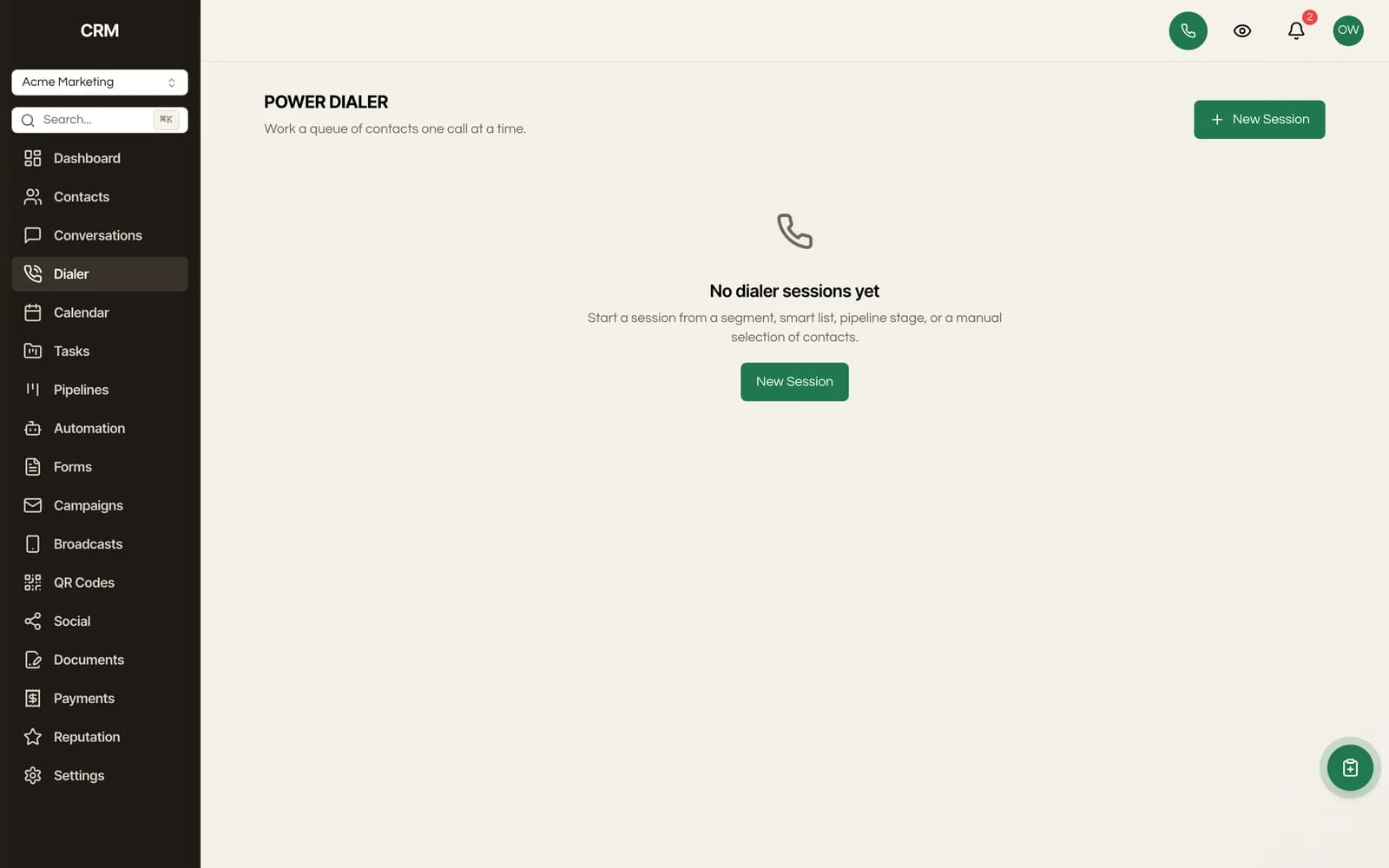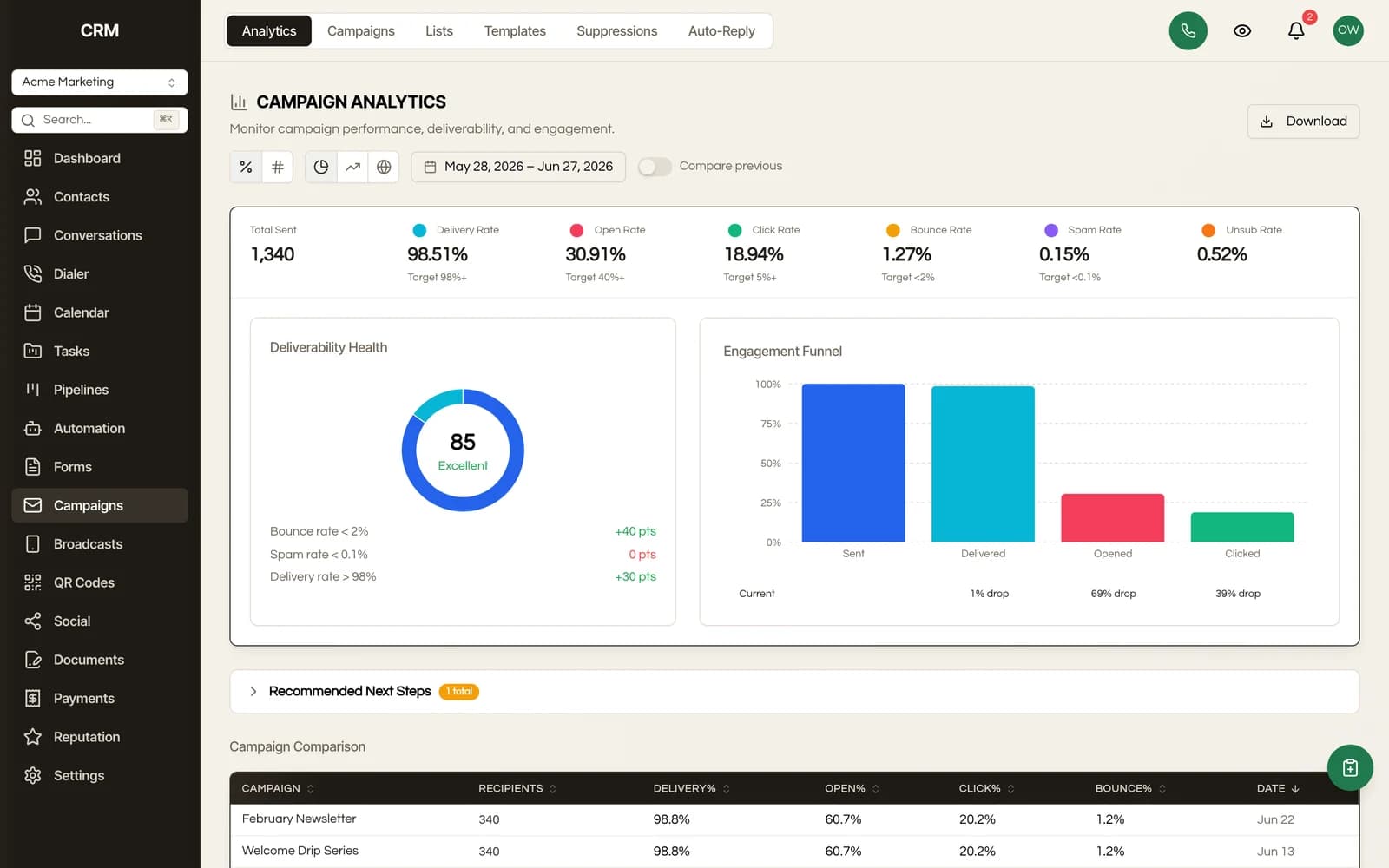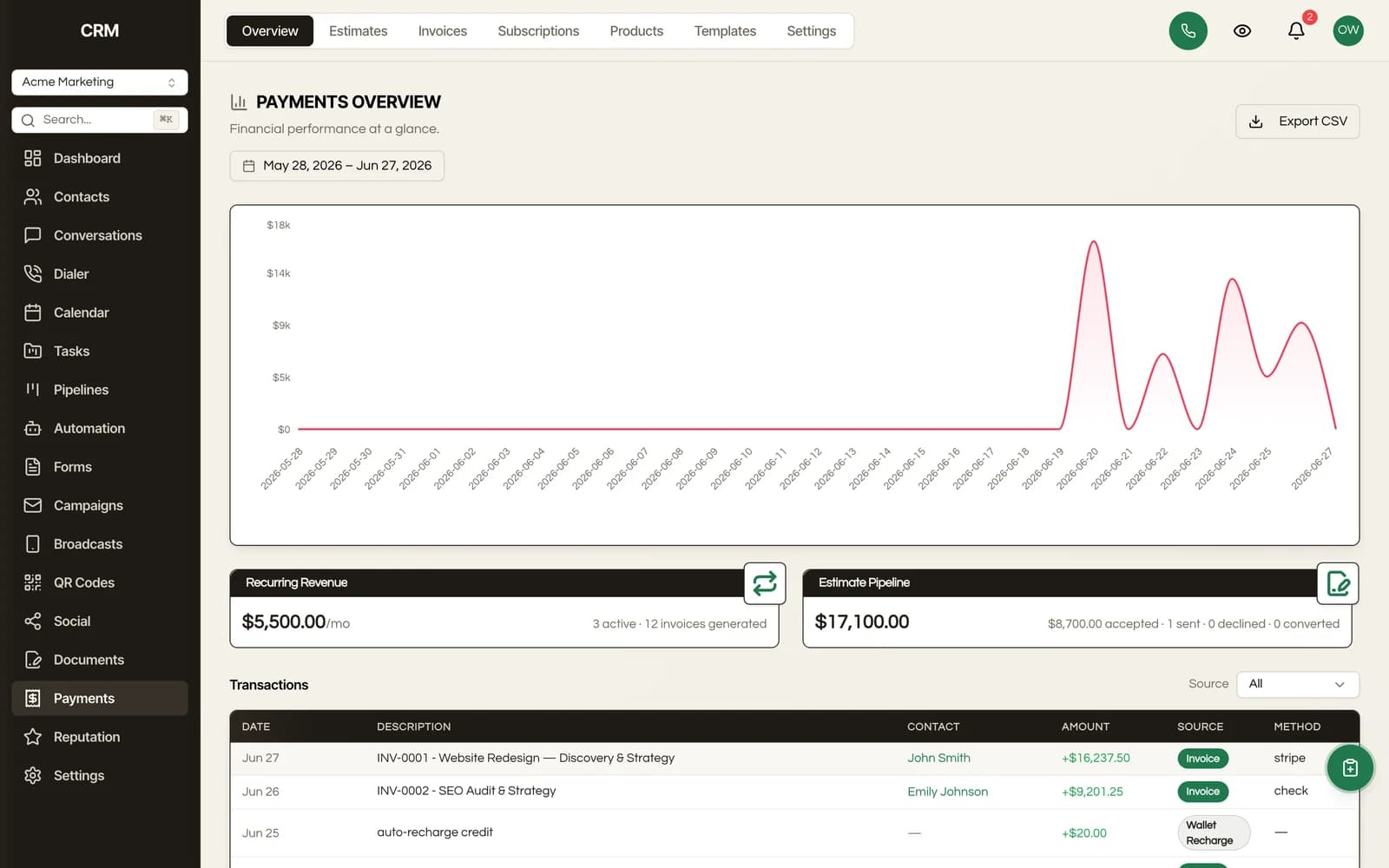
A $27,212.50 custom development project was successfully delivered to a client with Seedly as the foundational building block, about 60 hours of development time and $200-300 of Claude Code credits.
Delivered a $27k build on it
Join the Seedly owners community →You are not buying alone. Seedly owners trade setups and share add-ons. Join the community →
Telephony, email, payments, ads, analytics, calendars and AI. Every one of them your account, at their published rates, with nothing marked up on the way past.

One payment. Full source code. Unlimited seats, every client, forever.
Don't take our word for it. Take theirs.
Every review 5 out of 5 on Trustpilot. These are agency owners who made the same $1,499 decision you are weighing, in their own words.
Read every review →What It Does
Buy numbers, run the browser dialer, record and transcribe calls, and route inbound, all on your own telephony account at that carrier's published rates. Telnyx is generally the cheaper of the two and the CRM bills each channel at its true cost. A hosted CRM sells you the same minutes with a margin attached and calls it a bundled feature.

Buy numbers, run the browser dialer, record and transcribe calls, and route inbound, all on your own telephony account at that carrier's published rates. Telnyx is generally the cheaper of the two and the CRM bills each channel at its true cost. A hosted CRM sells you the same minutes with a margin attached and calls it a bundled feature.

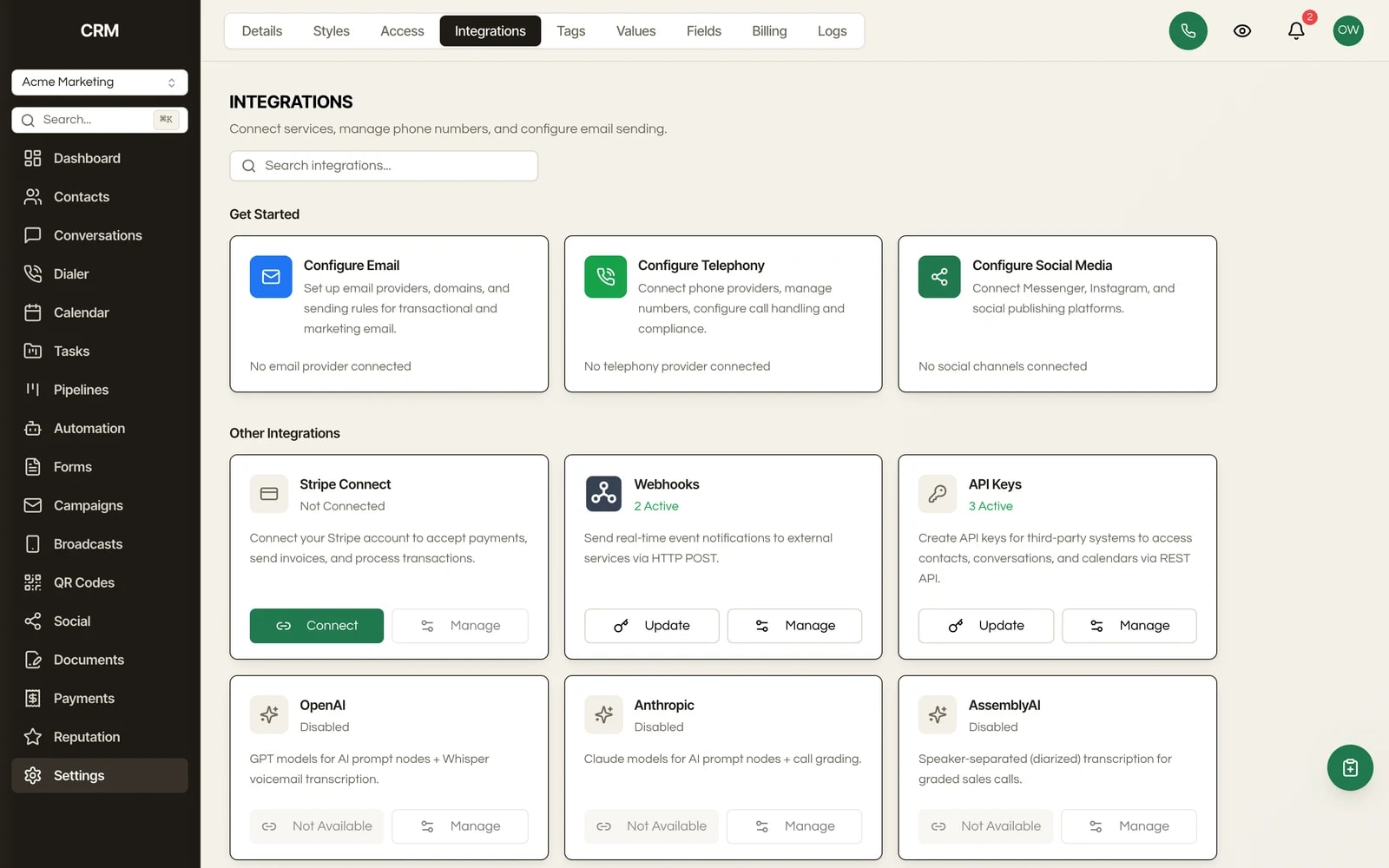
Connect SendGrid or Postmark, verify your sending domains in the app, and send from a reputation that belongs to you. There is a setup wizard for the DNS, repair tools for a domain that was configured wrong, and configurable sending limits. Your deliverability is not pooled with every other tenant on a platform.

Each sub-account connects its own Stripe through Stripe Connect, so a client's payments, customers and payouts stay theirs and settle to their bank. Nothing is skimmed in transit because the transaction never routes through us. You can also sync products from Stripe into the CRM catalog rather than typing them twice.

Call grading, transcription and rep coaching run on your OpenAI, Anthropic and AssemblyAI keys. You are billed by those providers at their rates. Every CRM that advertises AI credits is buying the same APIs and reselling them to you, and the markup is invisible because you never see the underlying bill.

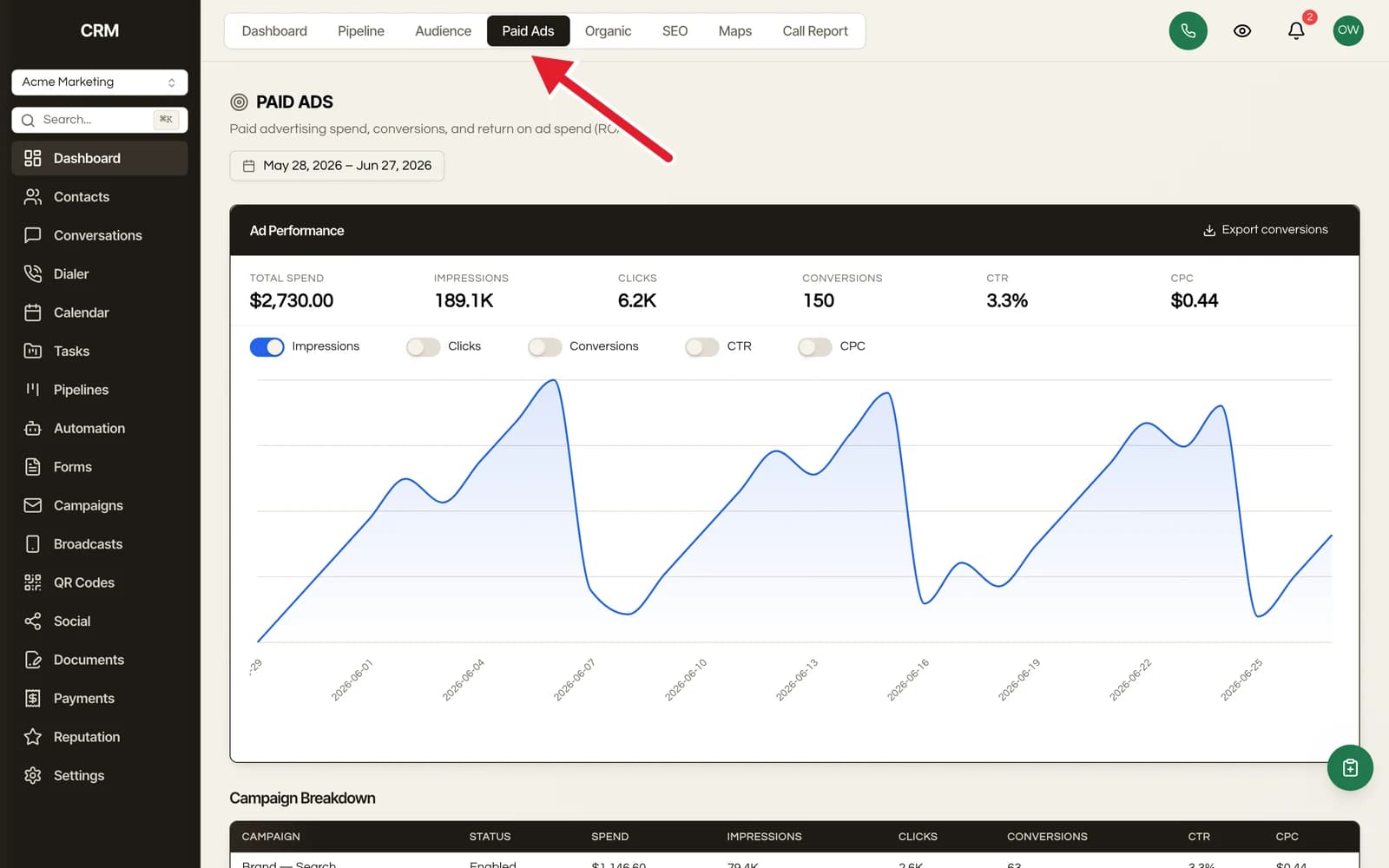
Google Ads with offline conversion upload, GA4, Search Console, Google Business Profile, and Meta's conversions API with a test-event check that proves itself. Conversions carry the real deal amount and are dated when the money actually moved, so the report credits the ad that earned the revenue instead of guessing.

CallRail connects for tracked numbers and call attribution, so paid-search calls land against the campaign that produced them rather than arriving as anonymous inbound.

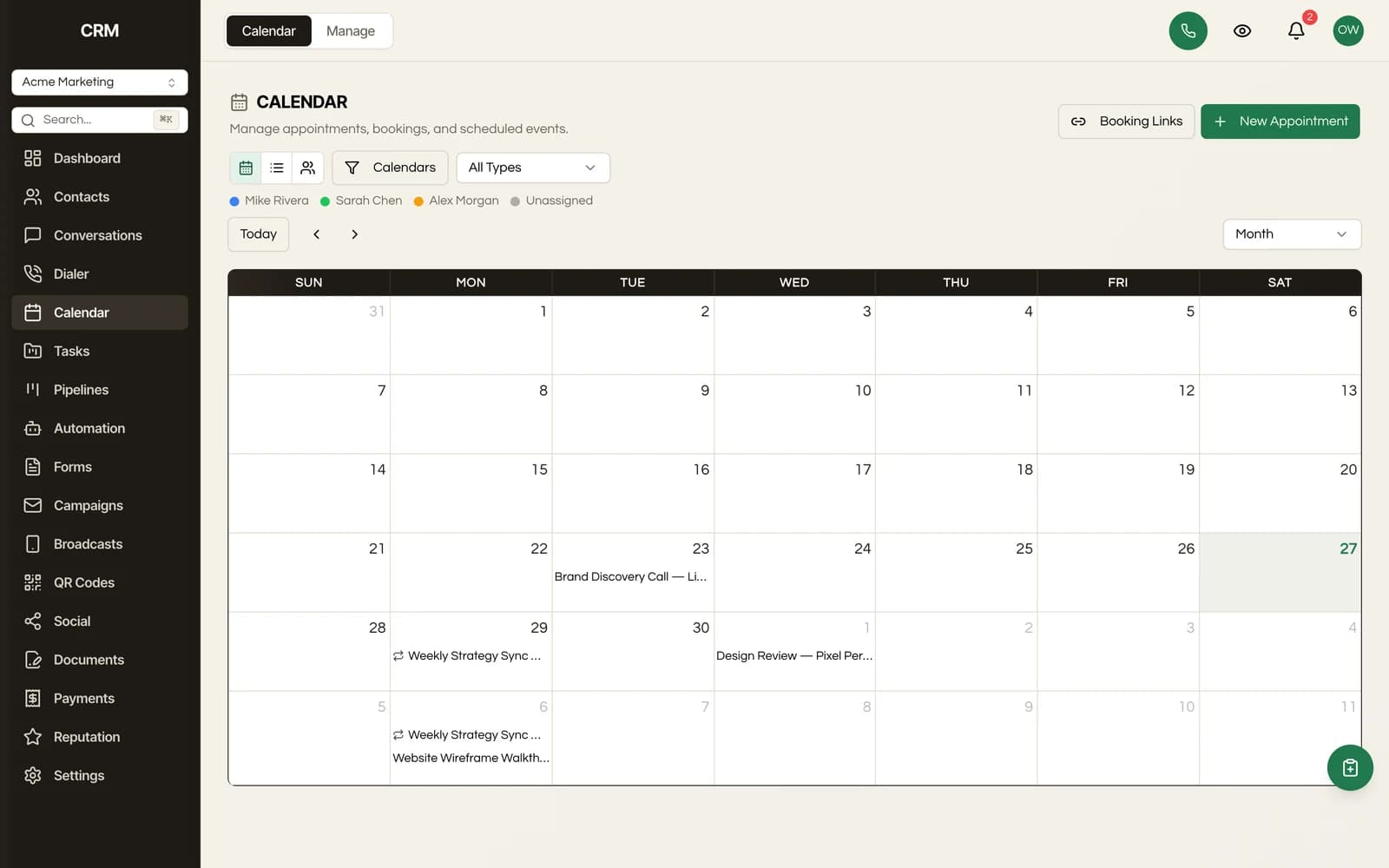
Two-way sync with Google Calendar and Outlook, per user and at parity between the two, so a booking made in the CRM blocks their real calendar and a personal appointment blocks the booking page. Zoom links generate automatically on a linked calendar.

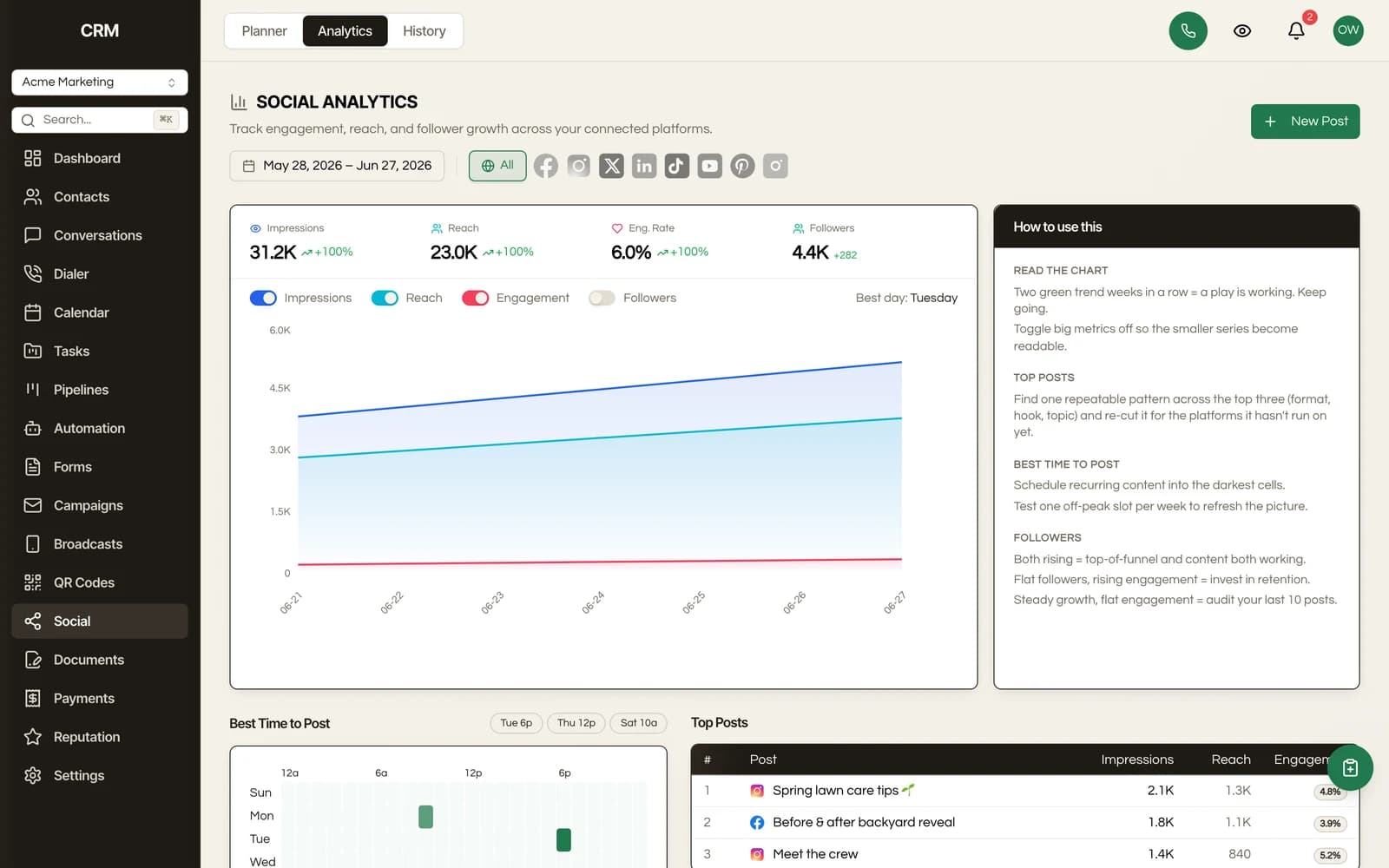
Facebook, Instagram, X, LinkedIn, TikTok, YouTube, Pinterest and Google Business profiles connect for scheduling, publishing and analytics, with comments coming back into the CRM inbox.

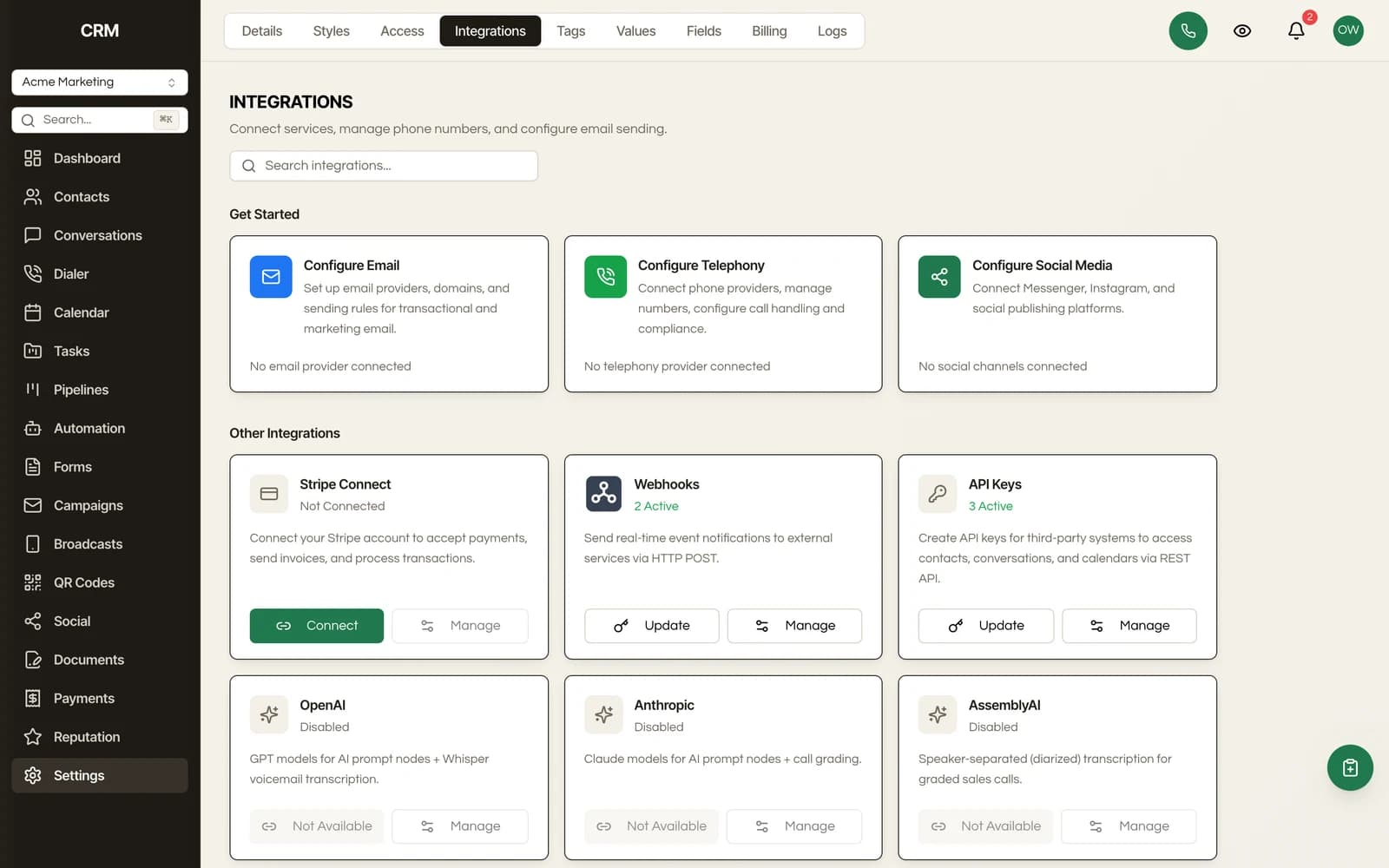
There is a real REST API, not a webhook and a promise. Keys are granted only the scopes the endpoints they use require, results report the full set size so you can page properly, and writing a contact merges into an existing record instead of creating a duplicate. The published specification is kept honest about which fields actually exist.

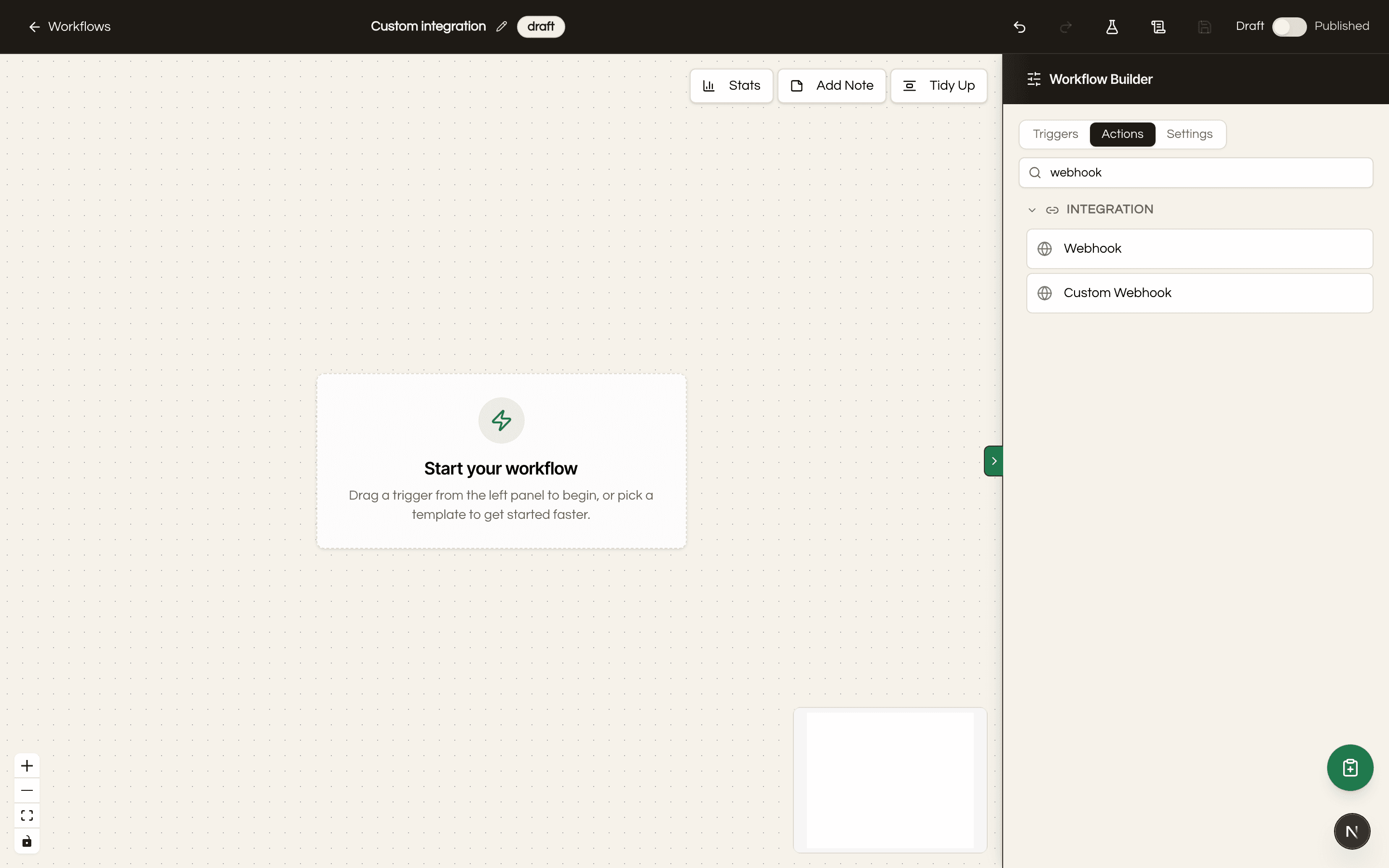
An inbound webhook is a workflow trigger, so anything that can post JSON can start an automation, and it finds or creates the contact by email rather than piling up duplicates. You can inspect the last requests a trigger received, which turns debugging somebody else's integration into reading rather than guessing. Outbound webhooks can carry a replay-protected signature so the receiving system can verify the call came from you.

The integrations above are the ones that ship. Because you own the source, the one your client needs and nobody has built is an afternoon rather than a feature request into somebody else's roadmap. That is the difference between an integrations page and a ceiling.

See it

How It Works
Sign up for Twilio or Telnyx, SendGrid or Postmark, Stripe, and whichever AI provider you want. They are your accounts, in your name, on your card.
Each integration has its own card in the CRM's integrations settings, several with setup wizards that walk the DNS and verification steps rather than leaving you with a support article.
Calls, texts, emails and AI run through your accounts and are billed to you by those providers at their published rates. Where you rebill a client, each channel bills at its true cost, and you decide the margin.
Use the REST API, an inbound webhook trigger or a signed outbound webhook to reach anything not on the list, or write the integration into the source you own.
When a platform bundles calling, texting, email and AI into a plan, it is buying those services wholesale from the same handful of vendors everyone uses and selling them on at a markup you never see itemised. That is a reasonable business, and it is also why the per-message and per-minute rates on those platforms drift further from the carrier's own rates every year.
Here the accounts are yours. Your Twilio bill comes from Twilio. Your OpenAI bill comes from OpenAI. When you rebill a client, each channel bills at its true cost and the margin between that and what you charge is yours to set, rather than being set for you by somebody else's pricing page.
It also means your reputation and your relationships are yours. Your sending domain is not pooled with every other tenant on a platform, and if you ever move on, the accounts, the numbers and the domains come with you because they were never ours.
You own the CRM and the accounts it connects to. Nothing in the middle takes a cut.
The Rest Of The Garden
Every module ships in the same source code you own. Slide through the rest of the garden.
FAQ
No, and there are no accounts of ours to use. You connect your own Twilio or Telnyx for telephony and your own SendGrid or Postmark for email, and those providers bill you directly at their rates. There is nothing sitting between you and them adding a margin.
Each sub-account connects its own Stripe through Stripe Connect, so a client's payments, customers and payouts stay isolated to their own account and settle to their bank. The transaction never routes through us, which is why there is no platform fee on it.
Not to us. Call grading, transcription and coaching run on your own OpenAI, Anthropic and AssemblyAI keys, and those providers bill you at their published rates. A CRM selling you AI credits is reselling the same APIs with a margin you cannot see.
Yes. A REST API with keys that carry only the scopes their endpoints require, result sets that report their full size so you can page correctly, and contact writes that merge into an existing record rather than creating duplicates.
Yes. An inbound webhook is a trigger, so anything that can post JSON can start an automation. It finds or creates the contact by email, and you can see the last requests it received, which is usually the difference between fixing an integration in ten minutes and losing an afternoon.
Reach it through the REST API or a webhook, or write it into the source. You own the code, so an integration nobody has built is a piece of work rather than a feature request queued behind somebody else's priorities.
Facebook, Instagram, X, LinkedIn, TikTok, YouTube, Pinterest and Google Business profiles, for scheduling, publishing and analytics, with comments flowing back into the CRM inbox.

One-time payment. No subscriptions. No renewals.
Secure checkout via Stripe. Your license key is emailed instantly.