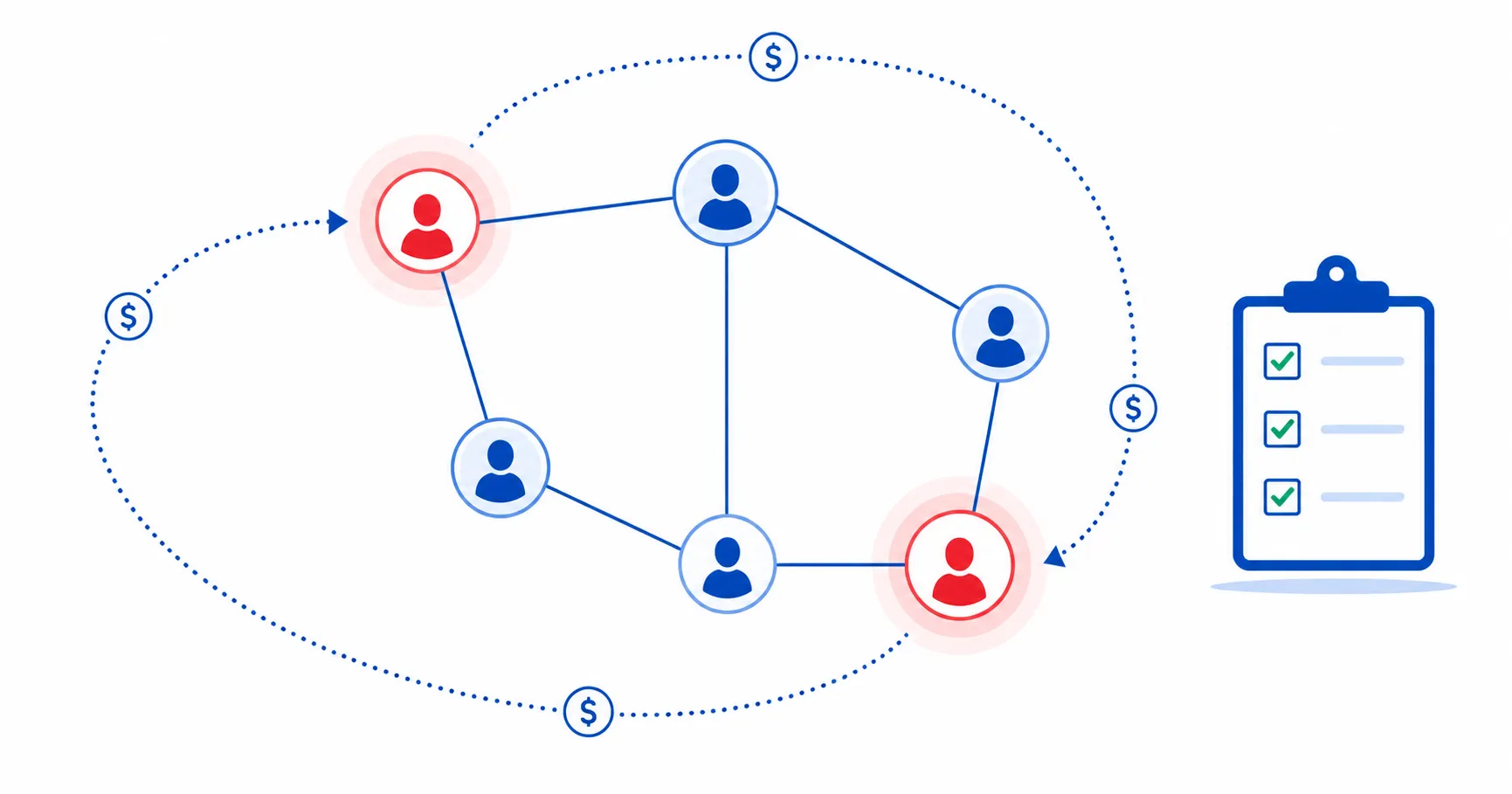
I left my engineering job in December 2023 making about $3K/month from a handful of clients. By November 2024 I'd crossed $15K/month. I scale exclusively on the half dozen referrals I get every month, and I have a 90+ percent close rate on meetings that come through those referrals.
Sounds great, right? Except for one problem. I still couldn't tell you which referral source paid for which month of rent.
My CRM had a "lead source" field. I filled it in maybe 40% of the time. The most common entry was "Referral." That's it. Just the word. No name, no date, no revenue attribution. Completely useless for making decisions.
I was growing fast and flying completely blind about the engine that was driving that growth.
The "Referral" lead-source problem
Most people who track referrals in their CRM do it the same way I did. They have a dropdown field. One of the options is "Referral." Maybe they're diligent and pick it 80% of the time. Maybe they're like me and it's closer to 40%.
Either way, you end up with a pie chart that says "62% of revenue comes from referrals" and absolutely nothing actionable beyond that.
You can't answer the questions that actually matter.
- Which specific person is sending you business?
- How fast do their referrals close compared to other sources?
- Are the people you THINK are your top referrers actually sending you revenue, or just sending you coffee chats?
I spent almost a year unable to answer any of these. And I was making decisions based on vibes the entire time.
Join the Seedly owners community.
Owners trade setups, share add-ons, and swap playbooks. See what people are building before you commit.
Three numbers that changed everything
I got tired of guessing and added three data points to every new contact in my CRM.
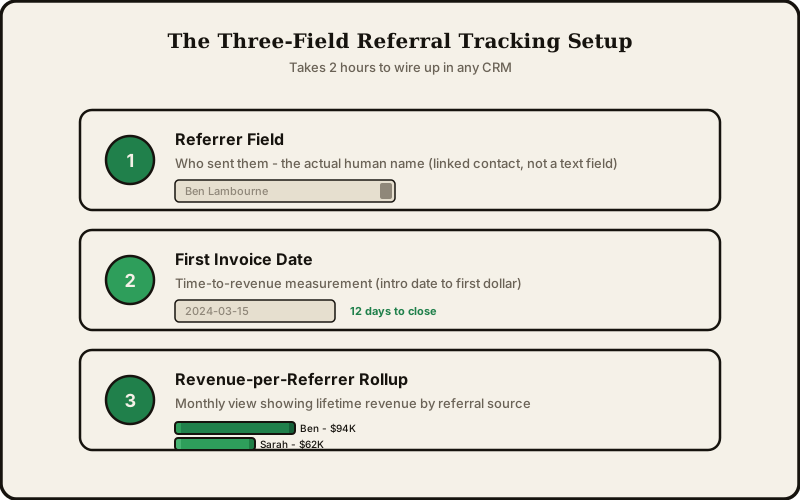
1. Referrer name - not "referral" as a category. The actual human who made the introduction.
2. Time from intro to first dollar - the date I got introduced and the date the first invoice went out.
3. Lifetime revenue per referrer - a running total of all revenue generated by clients that a specific person sent my way.
That's it. Three fields. Took me two hours to wire up.
The first real pattern showed up within weeks. Ben Lambourne hired me for his gutter business. Then he came back for a second business. Then he sent two other contractors my way. Before I tracked this properly, Ben was just another name in my contact list. After six months of data, he was clearly one of the most valuable relationships in my entire business.
What six months of data revealed
I had an assumption going in. I figured my biggest referrers were the loudest ones. The people tagging me in Facebook groups, shouting me out on social, making noise publicly.
I was wrong.
When I pulled the actual numbers after six months, some of those loud advocates had sent exactly zero paid clients. They generated awareness, sure. But awareness doesn't pay invoices.
Meanwhile, two quiet clients had been steadily funneling multiple businesses my way without any fanfare. No public posts. No group tags. Just direct introductions that turned into signed contracts.
The loud referrers were not the valuable referrers.
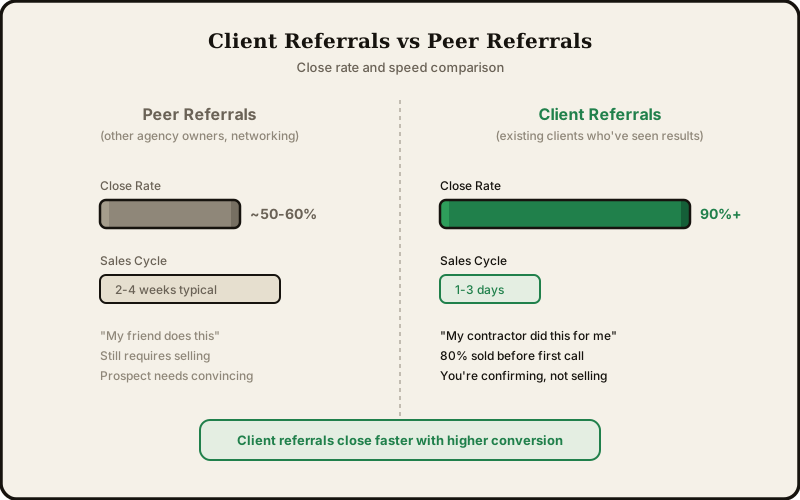
The data also revealed a speed difference I hadn't expected. Client referrals closed FAR faster than peer referrals. When an existing client introduces you to someone, that person is already 80% sold before the first call. They've seen the work. They've heard about the results firsthand. You're not selling - you're confirming.
Peer referrals (other agency owners, networking contacts) still close well compared to cold outreach. But there's a meaningful gap between "my friend does this" and "my contractor did this for me and here are the results."
The referral KPIs that actually matter
Once I had data flowing, I needed to decide what to measure. Most referral tracking guides throw 15 metrics at you. I use four.
Referral conversion rate. Of the introductions I receive, what percentage becomes a paying client? Mine sits around 60% for client referrals, 25% for peer referrals. If you're below 30% overall, the quality of your referral sources needs attention, not your sales process.
Customer acquisition cost (CAC) by channel. My referral CAC is effectively zero in hard dollars. No ad spend, no software fees for referral tracking software. Compare that to the $400-800 I was spending per lead on Google Ads before I turned them off. When you can see the actual CAC difference in your CRM reporting, the decision to invest more in referral relationships becomes obvious.
Time to close. The gap between introduction and first invoice. Client referrals average 11 days for me. Peer referrals average 34 days. Cold outbound averages 67 days. This metric alone tells you where to spend your follow-up energy.
Viral coefficient. How many of your referred clients go on to refer someone else? If it's above 1.0, you have a self-sustaining growth engine. Mine hovers around 0.4, which means referrals alone won't compound indefinitely, but combined with the near-zero CAC and fast close time, they're still the best channel by far.
You don't need a referral tracking spreadsheet template or a dedicated referral program platform to measure these. The three fields I described above, combined with your CRM's standard reporting, give you all four numbers.
The research backs this up
I'm not the only one who noticed this pattern. A Journal of Marketing Research study analyzed 51.7 million customers and found the following.
- Referred customers were 36% more likely to refer others (the flywheel effect is real)
- Their lifetime value was 20-36% higher than non-referred customers
- If you remind them they were referred and offer a reward, referrals increase by 21%
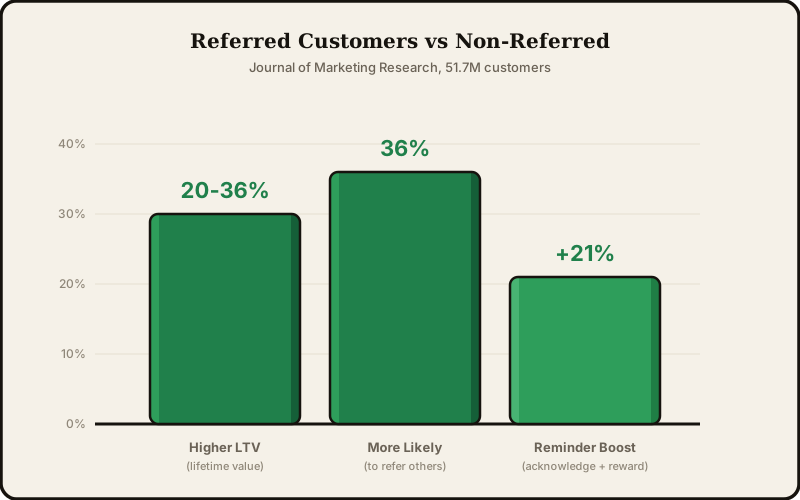
That last stat is wild. Just acknowledging the referral chain and giving people a reason to keep it going creates a measurable lift.
This is why companies like Robinhood (free stocks), Dropbox (free storage), Uber (cash bonuses), and Airbnb (discounts for both parties) invest so heavily in referral mechanics. It's not a marketing gimmick. The data says referred customers are fundamentally more valuable and more likely to continue the cycle.
Here's a little cheatcode. Referrals that generate MORE referrals work like a flywheel. Each referred customer who refers another creates compounding value that no other acquisition channel can match.
How to treat your top referrers
After six months of tracking, two people separated from the pack. One had brought in a single signed engagement himself, but the four clients he'd sent my way added up to nearly six figures of agency revenue.
I put these two on a completely different track.
- Monthly handwritten notes (not emails, physical notes)
- Standing offer to help on the house with anything in my wheelhouse
- No formal referral program, no tracking links, no gamification
That last point is intentional. The moment you turn your best referrers into "affiliates" with dashboards and commission tiers, you change the relationship. These people send you business because they trust you and want their contacts to get good results. Keep it personal.
Most of you haven't even attempted a single variable test on what makes your referrers tick. Start with the data. The right treatment becomes obvious once you can see who's actually driving revenue.
Two methods of tracking referrals (and why I picked the manual one)
There are fundamentally two approaches to referral tracking. Automated systems and manual CRM-based tracking.
Automated referral tracking uses referral codes, unique referral links, UTM parameters, and cookies to attribute new signups to the person who sent them. This is what Dropbox, Uber, and SaaS companies use. The referral tracking software handles attribution automatically. You set up a referral program, give each advocate a unique link, and the system logs every click, signup, and conversion.
Manual CRM-based tracking is what I use. The referrer tells me they made an introduction (or the prospect mentions who sent them), and I record it in a contact field. No referral codes. No tracking links. No cookie windows.
Why manual? Because my business does six referrals a month, not six hundred. The overhead of automated tracking only pays off at volume. At my scale, the five seconds it takes to type a name into a field is less friction than setting up and maintaining referral program software.
If you're running an e-commerce store or a SaaS product with hundreds of monthly signups, automated tracking with UTM parameters and referral codes makes sense. If you're a service business closing 5-15 deals a month from personal introductions, CRM-based tracking is simpler, cheaper, and gives you better context about the relationship.
The hybrid approach also works. Use your CRM for direct referrals from known contacts, and add UTM tracking to any public-facing referral links (like a "refer a friend" page on your website) so Google Analytics captures the source.
The actual CRM setup
You need three things in your CRM. This works in any system, whether you're on a SaaS platform or running your own self-hosted CRM.
Field 1 - "Referrer" on every contact record. This is a lookup/link to another contact, not a text field. You want to be able to click through and see all the people a specific referrer has sent you.
Field 2 - "First Invoice Date" on every contact. The date money first moved. Combined with the created date, this gives you intro-to-revenue speed per referrer.
Field 3 - A monthly view that rolls up lifetime revenue per referrer. This can be a saved filter, a report, or a dashboard widget. Whatever your CRM supports. You need to see, at a glance, which humans have generated the most total revenue through their introductions.
Two hours to set up. Zero ongoing maintenance beyond filling in the referrer field when a new contact comes in (which takes five seconds if you do it at intake).
The ROI on those two hours has been enormous. I went from "I think referrals are important" to knowing exactly which relationships to invest in, exactly how fast different referral channels convert, and exactly where my next dollar of growth is most likely to come from.
What about referral fraud?
If you ever scale to the point where you're offering cash incentives or commission-based referral rewards, fraud becomes a real concern. The common patterns are self-referrals (someone referring themselves under a different email), duplicate referrals (submitting the same person multiple times), and account cycling (creating fake accounts to trigger the reward).
At my scale with a manual CRM-based system, fraud isn't really a factor. I know every referrer personally. But if you're building an automated referral program with financial incentives, build in basic checks. Flag referrals where the referrer and prospect share the same IP address, require a minimum purchase before the reward pays out, and set a cap on referrals per person per month until you've validated the quality.
The simplest fraud prevention for service businesses - don't pay rewards until the referred client actually pays you. If the incentive only triggers after real revenue, the economics of gaming your system don't work.
Stop guessing
If you're growing on referrals and you can't name your top three referrers by revenue, you're leaving money on the table. Not because the referrals won't come without tracking, but because you can't double down on what's working if you don't know what's working.
The system is simple. Three fields, two hours, and six months of patience. The data will surprise you.
One last thought. Referral tracking is only as good as your data discipline. If you let your CRM fill up with junk contacts and outdated records, your referral attribution gets buried in noise. I wrote about how I audited and deleted 71% of my CRM data and why clean data is the foundation everything else depends on.
If you're evaluating CRM options and want to see how the numbers shake out long-term, I broke down what a CRM actually costs over five years with the full math that vendors won't show you.